
Setting up a company in a foreign country almost always requires notarised documents from the home jurisdiction. Whether you are an Irish entrepreneur expanding abroad, an Irish company establishing a subsidiary, or a multinational registering a branch in a new market, the local company registry will need authenticated proof of your identity and corporate standing.
Why Company Formation Documents Need Notarisation
Foreign company registries and regulators need to verify the legitimacy of the founding shareholders and directors. Notarisation by an Irish Notary Public, followed by apostille or legalisation, provides this verification. Without properly authenticated documents, your company registration will be rejected or delayed.
Documents Commonly Required
- Certificate of Incorporation: If an Irish company is the shareholder or parent, a notarised copy of its certificate of incorporation from the Companies Registration Office (CRO) is typically required.
- Memorandum and Articles of Association: Notarised copies of the company’s constitutional documents.
- Board Resolution: A resolution of the board of directors authorising the incorporation of the foreign subsidiary or branch, appointing representatives, and specifying the scope of activities.
- Good Standing Certificate: A certificate from the CRO confirming the Irish company is in good standing (not struck off or in liquidation).
- Passport Copies: Notarised copies of the passports of directors and shareholders who are individuals.
- Proof of Address: Notarised utility bills or bank statements for directors and shareholders.
- Power of Attorney: Authorising the local representative to handle the registration process and sign documents on behalf of the founders.
- Shareholder Register: A notarised copy or extract showing the current shareholders.

Watch: Hugh Phelan — Notary Public, Douglas, Cork
The Notarisation Process
The typical process for company formation documents involves:
- Gather documents: Collect all required documents, including originals or certified copies from the CRO.
- Notarisation: Hugh Phelan notarises each document, verifying signatures and certifying copies as appropriate.
- Apostille or legalisation: Depending on the destination country, documents are apostilled by the DFA (Hague Convention members) or legalised through the relevant embassy (non-members).
- Translation: If required by the destination country, a certified or sworn translation is arranged.
- Submission: Documents are submitted to the foreign company registry, either directly or through your local lawyer.
Country-Specific Requirements
Requirements vary significantly by country:
- EU/EEA countries: Generally accept apostilled documents. Translation into the local language may be required. The EU Company Law Directive provides some standardisation.
- UK: Companies House accepts apostilled documents. English-language documents need no translation.
- USA: State-level requirements vary. Delaware, New York, and California each have specific procedures. Apostilled documents are accepted.
- UAE/Saudi Arabia/Qatar: Full legalisation chain required. Documents must be notarised, DFA authenticated, and embassy legalised.
- Singapore/Hong Kong: Singapore now accepts apostille (since 2021). Hong Kong requires full legalisation through the Chinese Embassy.
Apostille vs Embassy Legalisation
Whether your documents need apostille or full embassy legalisation depends on whether the destination country is a member of the Hague Apostille Convention. Apostille is faster and cheaper. Embassy legalisation involves more steps and takes longer. Hugh Phelan can advise on the correct process for your target country.
How to Get Started
Contact Hugh Phelan’s office in Cork:
- Call (021) 489 7134 or email info@phelansolicitors.com
- Share the document checklist from your foreign lawyer or company registry
- Bring original documents, CRO certificates, and valid photo ID
Hugh Phelan is a Solicitor and Notary Public practising from East Douglas Street, Douglas, Cork. He holds a BCL from UCC, a Diploma in Notarial Law and Practice, and is dual-qualified as a solicitor in both Ireland and England & Wales. Appointed as a Notary Public by the Chief Justice of Ireland and commissioned for life.
Frequently Asked Questions
What documents do I need notarised for a foreign subsidiary?
Typically: certificate of incorporation, memorandum and articles of association, board resolution, good standing certificate, passport copies of directors and shareholders, and a power of attorney for the local representative. Your foreign lawyer will provide a specific checklist.
How long does the process take?
Notarisation itself is usually completed in a single appointment. Apostille from the DFA typically takes a few working days. Embassy legalisation for non-Hague countries can take 2-4 weeks. Allow sufficient time before your planned incorporation date.
Can I notarise CRO documents?
Yes. Hugh Phelan can notarise certified copies of CRO documents including certificates of incorporation, annual returns, and change of director forms. The original CRO-certified document should be brought to the appointment.
Need Documents Notarised for International Company Formation?
Contact Hugh Phelan, Solicitor & Notary Public in Cork, for prompt professional service.
📚 Related Guides
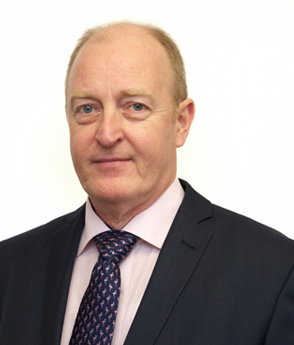
Hugh Phelan — Notary Public Cork
Solicitor & Notary Public appointed by the Chief Justice of Ireland. Over 20 years' experience. BCL (UCC), dual-qualified Ireland & England/Wales.
📍 Notary Public Cork — Hugh Phelan
Need a Notary Public in Cork? Hugh Phelan is a Solicitor & Notary Public appointed by the Chief Justice of Ireland, based at East Douglas Street, Douglas, Cork. Same-day appointments available.
Looking for a Notary Public in Cork?
Hugh Phelan is a Solicitor & Notary Public appointed by the Chief Justice of Ireland. Same-day appointments available.
Notary Public Cork — Book Now📞 +353-21-489-7134 · East Douglas Street, Douglas, Cork
Also see: Cork Notary Public