
While many countries accept the Hague Apostille for document authentication, a significant number do not. For these non-Hague countries, Irish documents must go through a more complex embassy legalisation process. This guide explains the difference, identifies common non-Hague destinations, and walks through the step-by-step process.
Understanding Document Legalisation
Document legalisation (also called embassy attestation or consular legalisation) is the process of authenticating documents for use in countries that are not members of the Hague Apostille Convention. The process involves multiple verification steps, with each step confirming the authenticity of the previous one. It is more time-consuming and expensive than the apostille process, but it is the only route for certain countries.
Apostille vs Embassy Legalisation
Apostille (Hague Convention countries):
- Single-step authentication after notarisation
- Issued by the Department of Foreign Affairs
- Universally accepted by all Hague Convention members
- Faster and less expensive
- Over 120 countries are members
Embassy Legalisation (non-Hague countries):
- Multi-step authentication chain
- Requires embassy or consular attestation
- May require further attestation by the destination country's Ministry of Foreign Affairs
- Slower and more expensive
- Required for countries including Qatar, Egypt, Saudi Arabia, UAE, China, and others

Watch: Hugh Phelan — Notary Public, Douglas, Cork
Common Non-Hague Destinations for Irish Documents
The following countries are among those not in the Hague Apostille Convention and require full embassy legalisation:
- Gulf States: Qatar, UAE, Saudi Arabia, Kuwait, Bahrain, Oman
- Middle East/North Africa: Egypt, Iraq, Libya, Algeria
- Asia: China (mainland), Vietnam, Indonesia, Thailand, Malaysia
- Africa: Nigeria, Kenya, Ghana, Ethiopia
Note: Some countries may have joined the Convention recently. Always verify the current Hague Convention membership status before starting the process.
The Legalisation Process Step-by-Step
- Step 1 — Notarisation: Have your documents notarised by Hugh Phelan, Notary Public, at East Douglas Street, Douglas, Cork.
- Step 2 — Apostille: Even for non-Hague countries, the apostille is typically obtained as an intermediate step, as many embassies require it before attestation.
- Step 3 — Embassy Attestation: Submit apostilled documents to the relevant embassy or consulate. If there is no embassy in Ireland, you may need to use their embassy in London.
- Step 4 — Destination MOFA: Some countries require a final attestation by their Ministry of Foreign Affairs upon arrival.
Embassy Information for Common Destinations
Embassies in Dublin that can attest documents include:
- Embassy of Egypt: Located in Dublin
- Embassy of Saudi Arabia: Located in Dublin
- Embassy of China: Located in Dublin
- Embassy of UAE: Located in London (no Dublin embassy)
- Embassy of Qatar: Located in London (no Dublin embassy)
Processing times vary by embassy. Some offer expedited services for additional fees.
Practical Tips
- Start early: The full legalisation process can take 3–6 weeks.
- Multiple copies: Some countries require multiple legalised copies. Discuss with Hugh Phelan at the outset.
- Legalisation agencies: Specialist agencies can handle embassy submissions on your behalf.
- Check current status: Countries occasionally join the Hague Convention. Verify membership before starting.
- Translation: Many non-Hague countries require certified translations into their official language.
Contact Hugh Phelan at (021) 489 7134 for guidance on your specific requirements. See also our document legalisation page.
Costs and Budgeting
Embassy legalisation is more expensive than the apostille-only route. Budget for the following costs:
- Notarisation fees: Vary by document type and complexity
- Apostille fee: Set by the Department of Foreign Affairs
- Embassy attestation fee: Varies by embassy — some charge per document, others per page
- Courier costs: If documents need to be sent to an embassy in London or elsewhere
- Translation costs: Certified translation into the destination language
- Agency fees: If using a specialist legalisation agency
Contact Hugh Phelan's office at (021) 489 7134 for notarisation fee information. Embassy fees should be confirmed directly with the relevant embassy.
Common Mistakes to Avoid
- Wrong order: Documents must follow the correct sequence — notarisation first, then apostille, then embassy attestation
- Expired documents: Some embassies reject documents that are too old — check validity requirements
- Missing steps: Skipping the apostille step when the embassy requires it will result in rejection
- Wrong embassy: Ensure you submit to the correct embassy for the destination country
- Insufficient copies: Some countries require multiple legalised copies — prepare these upfront
Frequently Asked Questions
What is the difference between an apostille and embassy legalisation?
An apostille is a single-step authentication for Hague Convention countries. Embassy legalisation is a multi-step process involving notarisation, apostille, embassy attestation, and sometimes MOFA attestation.
Which countries require embassy legalisation?
Countries not in the Hague Convention, including Qatar, UAE, Saudi Arabia, Egypt, China (mainland), and many others.
How long does embassy legalisation take?
The full process typically takes 3-6 weeks.
Can Hugh Phelan help with embassy attestation?
Hugh Phelan handles notarisation and can recommend specialist legalisation agencies for embassy submissions.
Need Documents Legalised for a Non-Hague Country?
Contact Hugh Phelan, Solicitor & Notary Public in Cork, for prompt professional notarisation and apostille guidance.
📚 Related Guides
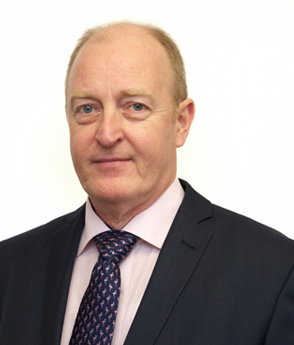
Hugh Phelan — Notary Public Cork
Solicitor & Notary Public appointed by the Chief Justice of Ireland. Over 20 years' experience. BCL (UCC), dual-qualified Ireland & England/Wales.
📍 Notary Public Cork — Hugh Phelan
Need a Notary Public in Cork? Hugh Phelan is a Solicitor & Notary Public appointed by the Chief Justice of Ireland, based at East Douglas Street, Douglas, Cork. Same-day appointments available.
Looking for a Notary Public in Cork?
Hugh Phelan is a Solicitor & Notary Public appointed by the Chief Justice of Ireland. Same-day appointments available.
Notary Public Cork — Book Now📞 +353-21-489-7134 · East Douglas Street, Douglas, Cork
Also see: Cork Notary Public