The Netherlands is one of the most popular EU destinations for Irish professionals, particularly in technology, finance, and pharmaceuticals. As an EU member state and Hague Convention member, the document authentication process is well-established.
The Netherlands and Document Authentication
The Netherlands is both an EU member state and a founding member of the Hague Apostille Convention. For Irish documents going to the Netherlands, two frameworks may apply:
- EU Public Documents Regulation (2016/1191): Certain public documents (birth certificates, marriage certificates, death certificates, and certificates of no criminal record) may be accepted between EU member states without apostille, accompanied by a multilingual standard form
- Hague Apostille Convention: For documents not covered by the EU regulation (private documents, powers of attorney, commercial documents), the standard apostille process applies
Common Documents
Employment and Work
- Academic qualifications: For credential evaluation by Nuffic (the Dutch organisation for internationalisation in education)
- Professional certificates: For regulated professions in the Netherlands
- Employment references: Sometimes required for Dutch employers
Residency and BSN Registration
- Birth certificate: Required for BSN (citizen service number) registration at the gemeente (municipality). May be accepted under the EU regulation with a multilingual standard form, without apostille
- Marriage certificate: For registering a partner or spouse
- Legalised/apostilled documents: For non-public documents
Property and Business
- Powers of attorney: For Dutch property transactions — the Dutch notaris (civil law notary) has specific format requirements
- Company documents: For KvK (Chamber of Commerce) registration
- Financial declarations: For mortgage applications
Watch: Hugh Phelan — Notary Public, Douglas, Cork
The Dutch Notaris System
The Netherlands has a civil law notary system (notaris) that is different from the common law Notary Public system in Ireland. A Dutch notaris is a specialised legal professional who handles property conveyancing, company formation, and family law matters. When dealing with a Dutch notaris, they may have specific requirements for the format of Irish notarised documents.
Translation Requirements
Dutch authorities generally accept documents in English for many purposes, though some institutions may require Dutch translation. If required, a certified (beëdigd) translator in the Netherlands can provide the translation. For the EU Public Documents Regulation route, multilingual standard forms are available in all EU languages.
Frequently Asked Questions
Do I need an apostille for all documents going to the Netherlands?
Not necessarily. Certain public documents (birth, marriage, death certificates) may be accepted under the EU Public Documents Regulation without apostille. Private documents and powers of attorney do need an apostille.
Do I need a Dutch translation?
Many Dutch institutions accept English documents. Some may require Dutch translation by a certified translator. Check with the receiving institution.
What is a BSN and do I need notarised documents for it?
The BSN (burgerservicenummer) is the Dutch citizen service number, required for work, banking, and government services. You typically need a birth certificate for BSN registration.
Can I buy property in the Netherlands from Ireland?
Yes. A notarised and apostilled power of attorney allows your Dutch notaris to handle the purchase on your behalf.
Need Documents Notarised in Cork?
Contact Hugh Phelan, Solicitor & Notary Public in Cork, for prompt professional service.
📚 Related Guides
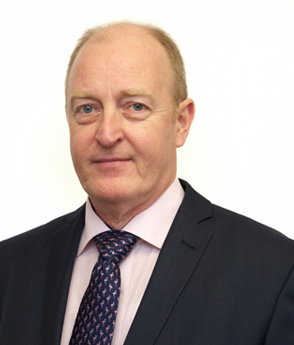
Hugh Phelan — Notary Public Cork
Solicitor & Notary Public appointed by the Chief Justice of Ireland. Over 20 years' experience. BCL (UCC), dual-qualified Ireland & England/Wales.
📍 Notary Public Cork — Hugh Phelan
Need a Notary Public in Cork? Hugh Phelan is a Solicitor & Notary Public appointed by the Chief Justice of Ireland, based at East Douglas Street, Douglas, Cork. Same-day appointments available.
Looking for a Notary Public in Cork?
Hugh Phelan is a Solicitor & Notary Public appointed by the Chief Justice of Ireland. Same-day appointments available.
Notary Public Cork — Book Now📞 +353-21-489-7134 · East Douglas Street, Douglas, Cork
Also see: Phelan Solicitors — Book Online