
Not every country accepts an apostille. Countries that are not members of the Hague Apostille Convention — including the UAE, China, Saudi Arabia, Qatar, and several African nations — require a different, more complex process called embassy legalisation (or consular legalisation). This guide explains the complete process from Cork.
What Is Embassy Legalisation?
Embassy legalisation is a multi-step authentication process for documents destined for non-Hague Convention countries. It involves:
- Notarisation by a Notary Public (Hugh Phelan in Cork)
- DFA Authentication — the Department of Foreign Affairs authenticates the notary’s seal
- Embassy/Consular Legalisation — the embassy or consulate of the destination country stamps the document
This chain of authentication creates a verified trail from the notary to the foreign government.
Step 1: Confirm the Country Is Non-Hague
Notable non-Hague countries include:
- Middle East: UAE, Saudi Arabia, Qatar, Kuwait, Bahrain, Oman, Iraq
- Asia: China (mainland), Malaysia, Indonesia, Pakistan, Bangladesh
- Africa: Nigeria, Egypt, Kenya, Ghana, Ethiopia
If the country is a Hague member, you need an apostille instead — see our apostille guide.

Watch: Hugh Phelan — Notary Public, Douglas, Cork
Step 2: Identify Required Documents
Non-Hague countries often have very specific requirements. Some embassies require particular wording, specific document formats, or additional declarations. Check directly with the embassy or consulate.
Step 3: Notarisation in Cork
Hugh Phelan, Solicitor and Notary Public at East Douglas Street, Douglas, Cork, appointed by the Chief Justice of Ireland, has experience with documents for non-Hague countries. He holds a BCL from UCC and a Diploma in Notarial Law, and is dual-qualified in Ireland and England & Wales.
Step 4: DFA Authentication
This is different from an apostille. The DFA authenticates the notary’s seal but does not issue an apostille certificate. Instead, they confirm the seal is genuine so the embassy can then legalise it. Submit to: Authentication Section, Department of Foreign Affairs, Iveagh House, 80 St Stephen’s Green, Dublin 2.
Step 5: Embassy or Consular Legalisation
Key points:
- Some embassies are in Dublin, others in London (e.g., UAE, Saudi Arabia)
- Each embassy has its own fees, processing times, and submission requirements
- Processing can take from a few days to several weeks depending on the embassy
- Some embassies accept postal submissions; others require in-person attendance
Specialist legalisation agents can handle the embassy step on your behalf, saving time and travel.
Step 6: Translation (If Required)
Many non-Hague countries require Arabic, Chinese, or other language translations. Check whether the translation should be done in Ireland or in the destination country.
Timeline: Non-Hague Legalisation from Cork
- Day 1–2: Notarisation in Cork
- Day 2–7: DFA authentication (2–5 working days)
- Day 7–21: Embassy legalisation (varies greatly by embassy)
- Day 21+: Translation and courier
Total: 2–4 weeks minimum. Start as early as possible.
Frequently Asked Questions
What is the difference between an apostille and embassy legalisation?
An apostille is a single-step authentication for Hague Convention countries. Embassy legalisation is a multi-step process (DFA + embassy) for non-Hague countries. Both achieve the same goal — authenticating the document for use abroad.
How much does embassy legalisation cost?
Costs vary by embassy. The DFA authentication fee is separate from the embassy’s own legalisation fee, which can range from €30 to over €100 per document. Contact the relevant embassy for current fees.
Can a legalisation agent help?
Yes. Specialist legalisation agents handle the DFA and embassy steps on your behalf. This is particularly useful for embassies based in London. They charge a service fee in addition to the official costs.
Is the UAE a Hague Convention member?
No. Documents for the UAE require embassy legalisation through the UAE Embassy. See our dedicated UAE documents guide.
Need Notarial Services in Cork?
Contact Hugh Phelan, Solicitor & Notary Public, at East Douglas Street, Douglas, Cork for prompt professional service.
📚 Related Guides
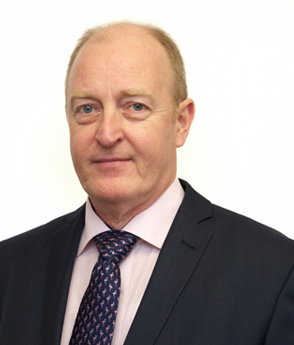
Hugh Phelan — Notary Public Cork
Solicitor & Notary Public appointed by the Chief Justice of Ireland. Over 20 years' experience. BCL (UCC), dual-qualified Ireland & England/Wales.
📍 Notary Public Cork — Hugh Phelan
Need a Notary Public in Cork? Hugh Phelan is a Solicitor & Notary Public appointed by the Chief Justice of Ireland, based at East Douglas Street, Douglas, Cork. Same-day appointments available.
Also see: Phelan Solicitors — Book Online